
















This post accompanies our latest Saltwater Edge Podcast episode with Tony Friedrich of the American Saltwater Guides Association (ASGA). Listen wherever you get your podcasts or watch on YouTube.
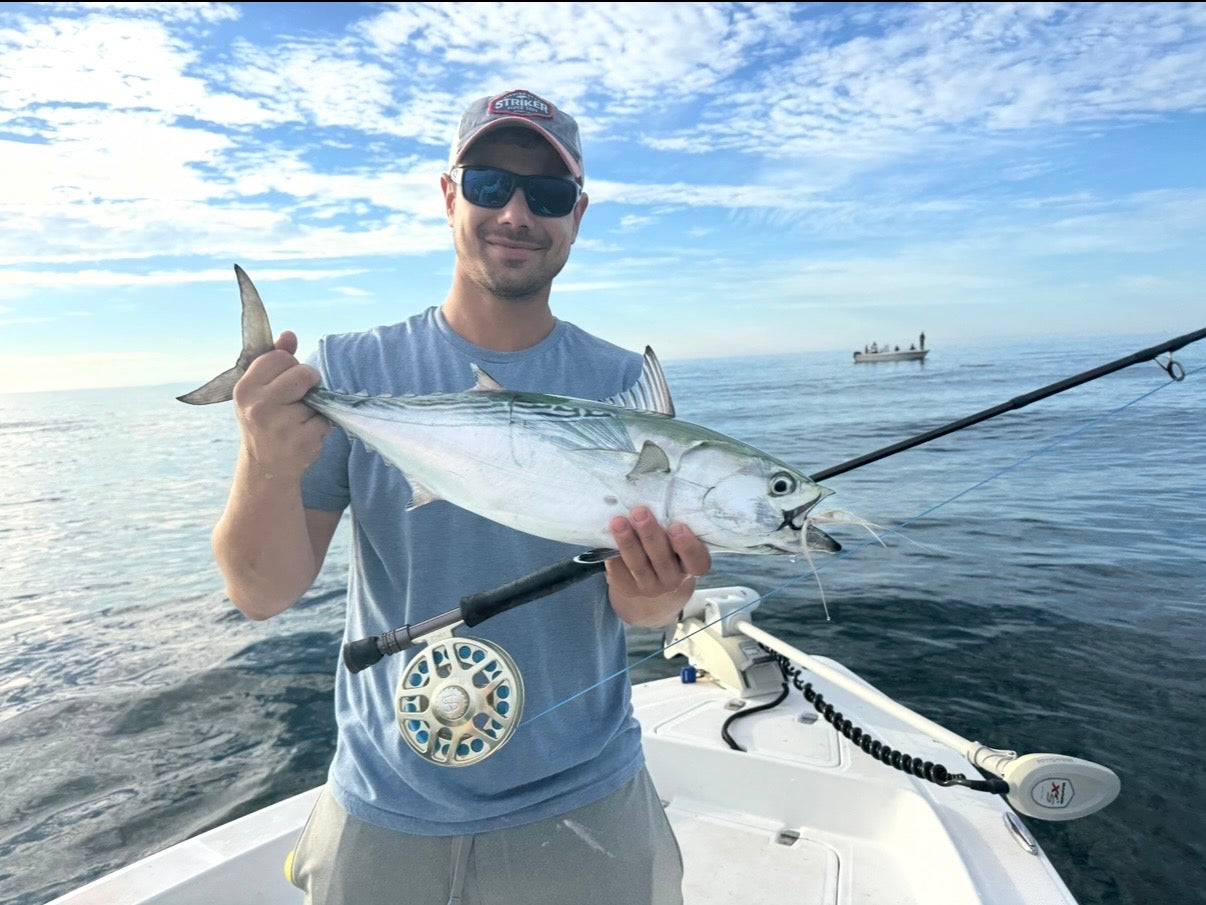
The 2026 Rhode Island recreational fishing regulations arrived recently, and the news wasn't good. The proposal to put basic guardrails on bonito and false albacore — two species that have become the backbone of our fall fishery — did not get the support it needed. Status quo prevailed. No limits. No commercial cap. Nothing.
We wanted to give everyone who showed up, wrote letters, and missed dinner with their families the rest of the story. So I asked Tony Friedrich of ASGA back on the podcast to walk through exactly what happened.
What we actually asked for
This was never a radical proposal. Massachusetts passed a five-fish aggregate limit on albies and bonito after rampant problems — juvenile bonito being cast-netted for bait, fish being sold off the books at farmers markets. Rhode Island typically aligns with Massachusetts, so the path seemed clear.
The original proposal was three fish per angler, based on Rhode Island's own data showing roughly 98% of recreational anglers keep three or fewer. When the charter community pushed back at the first hearing, we listened and moved to five fish — matching Massachusetts exactly.
On the commercial side, ASGA proposed capping landings at the recent average — the most common approach in fisheries management. When that was rejected, the offer went up to 50,000 pounds, more than double the biggest year of landings in the last five. The final proposal was three to five times average landings. Nobody was proposing a moratorium. Nobody was trying to end a commercial fishery.
What happened instead
At the hearing, the proposal was presented as a choice between a commercial moratorium and no regulations at all — something we never suggested. The commercial community, understandably, was furious at a moratorium that didn't exist. Requests for the exact landings data went unanswered for weeks. The Marine Fisheries Council — an advisory body — spent about fifteen minutes on the issue, characterized the public comments as "all over the place," and never mentioned that comments ran 60 to 3 in favor across two packed hearings.
Two hearings. Dozens of anglers who took time off work and missed dinner with their families. Letters, emails, polite and well-informed testimony. None of it was represented accurately when the decision was made.
Why it matters
Recreational fishing contributes about $320 million to Rhode Island's economy — more than commercial fishing, and it's not close once you set aside squid. In a recent year there were roughly 900,000 trips targeting bonito in New England. When the albies roll into town, you can feel it: boat gas, sandwiches, lures, guide trips, rods. And with striped bass facing harder times ahead, abundant albie and bonito fisheries are exactly what will keep anglers — and coastal businesses — going.
There's precedent for acting before a crisis, too. Rhode Island's tautog regulations, now held up as a management success, passed by a single vote. And the 1996 tautog management plan's statement of the problem reads almost word-for-word like the albie and bonito situation today. We've seen this movie. We know how it ends if nothing is done.
What comes next
This isn't over. Massachusetts' new regulations will likely push more harvest pressure into unregulated Rhode Island waters this summer, and people are going to see it with their own eyes. The rulemaking cycle comes back around every year, and ASGA will be back — with the science, the data, and full transparency about the process.
In the meantime, ASGA is deploying acoustic tags on bonito, just as they did for false albacore through the Albie Project, building the science the managers say they need.
Thank you — and stick with it
To everyone who showed up: thank you. Your effort wasn't wasted, even when the outcome stings. Advocacy is a marathon, not a touchdown dance. As Tony says, it's water on a stone — it breaks over time.
The Saltwater Edge brand promise has three parts: we'll ship your order by 3:00, we fish the gear we sell, and we'll advocate for the resource. That third one isn't always pretty. But we're not going away.
Want to get involved? Check out the American Saltwater Guides Association, listen to the full episode, and when the next comment period opens — show up one more time.



Frederick Thurber
agosto 28, 2026
I would suggest that we all reread Dick Russell’s book, Striper Wars. He makes it pretty clear how difficult (impossible really) it was to deal with the intransigent Marine Fisheries Council and RI’s DEM Division of Fish and Wildlife. It appears that nothing has changed. The only hope is to go over their heads directly to the governor and make it an election issue.