












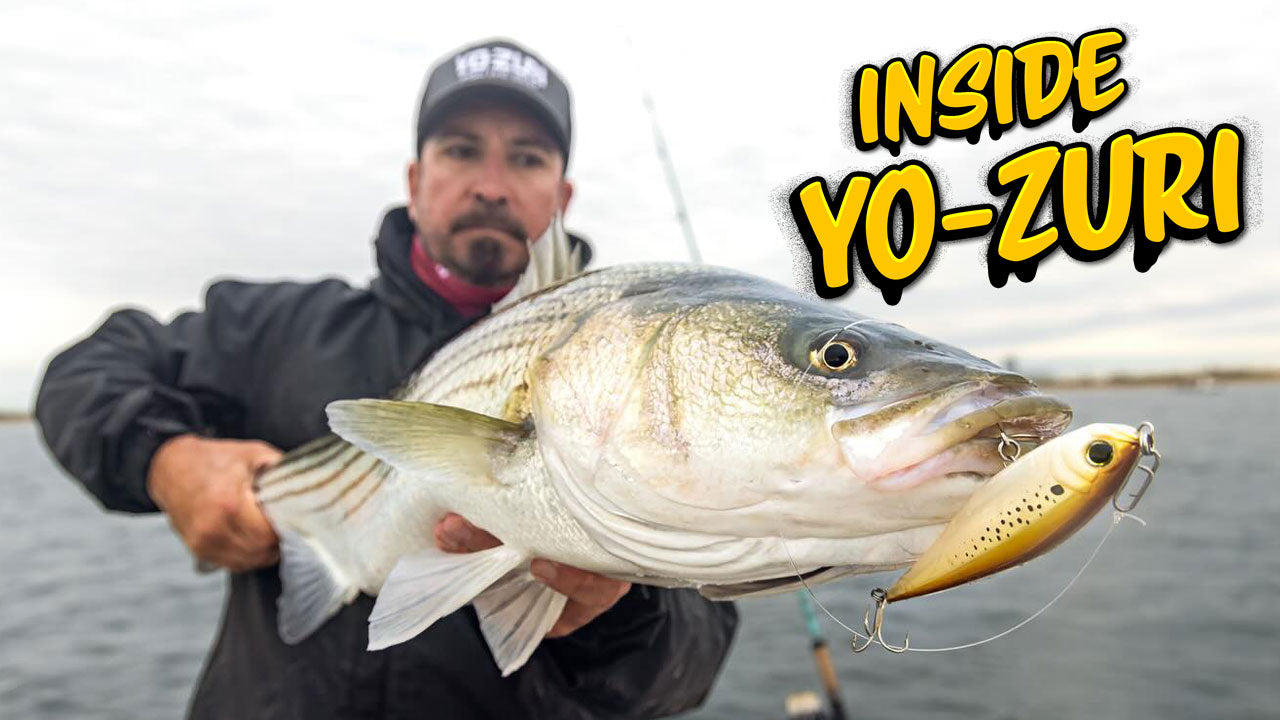

When Chris Bishop makes his June run through New England, we make sure to sit him down. Chris is Vice President of Sales & Marketing at Yo-Zuri, a 15-year veteran of the company, and — more importantly for our purposes — a guy who fishes constantly, from Sebastian Inlet snook to Cape Cod Canal stripers. We recorded a conversation about the lures many of us fish all season, and the design thinking behind them. Here are the highlights; the full episode is on our YouTube channel and podcast feed.
Mag vs. Hydro: what the names actually mean
If you've browsed the Yo-Zuri wall, you've seen "Mag" and "Hydro" in front of a lot of product names. The difference is internal.
Mag means the lure carries Yo-Zuri's internationally patented magnetic weight transfer system. Two lead balls (or, in bigger baits like the Mag Pencil, a weighted sled) lock in the nose of the lure under a magnet. When you load the rod and start your forward cast, the weight snaps to the tail — you'll hear it, and first-timers sometimes think they've cracked a rod tip. That tail-weighted flight is what lets these baits punch through a 20-mph headwind, and just as importantly, it keeps your cast on line. As Chris put it, putting the bait exactly where you want it in a crosswind is often "the difference between an okay day and a great day."
Hydro baits also cast far, but use a traditional weight transfer: the weights rest in a slot rather than locking under a magnet. The practical difference is casting style — shoot a Mag bait like a dart; a Hydro bait rewards a long, looping cast you can lay out on target.
The Mag Darter: the lure that almost always works
The Mag Darter may be the most trusted plastic darter in the Northeast, and Chris explained why it's different from other darters: it doesn't just slide side to side, it swims. That hybrid action — part darter, part swimmer — is unique in the category.
Where it shines is moving water. Everyone thinks of darters as surf plugs for white water, but Chris fishes the Mag Darter around bridge shadow lines at night and in inlets and breachways on current. His approach: make a long cast into the current, let the bait swing slow with an occasional rod-tip twitch, and work the edge of the eddy. Because it has no lip, it ricochets off boulders and bridge pilings without fouling — and that deflection is often what triggers the bite, the same way a bass angler grinds a crankbait into cover.
It also floats. You can stall it in current, let it rise, even float it out to fish you can't reach and start your retrieve there. For stripers around inlets Chris fishes the 6.5-inch almost exclusively; the 5-inch, 1-oz size is our best seller and a perfect match for smaller bait.
The Mag Pencil: designed for us
The Mag Pencil is a Northeast bait, full stop — Chris estimates 98% of them sell here. The sled-style weight transfer solves the classic big-pencil problem: most large topwaters "cast like a potato chip." This one gets an extra 30–40 feet over anything comparable, comes with hardware you don't need to upgrade, and walks beautifully.
Worth understanding: the pearl finishes. Pearl isn't paint — it's a powder mixed into the plastic before molding, so the finish runs all the way through the bait. You can let bluefish chew on it all day and it still looks nearly new. It's also a more natural look than straight bone.
Hydro Minnow LC: the shallow-water minnow
Chris calls the Hydro Minnow LC his pick over every other minnow plug in the category, and the key is the small lip. It runs shallower than the competition — with the rod tip up it'll swim in a foot of water — which makes it ideal for New England boulder fields, back-bay flats, and shallow outer Cape beaches. Slow-rolled with the tip high it even works like a wake bait, an approach that has quietly become one of Chris's most productive techniques at the Canal. If you need to get deeper, that's what the bigger Mag Darter or the sinking Mag Speed is for.
Quick lip-design lesson from Chris: on plastic baits, the smaller and more vertical the lip, the shallower the lure runs. Deep divers have long lips set at a shallow angle; a true wake bait's lip points straight down and just pushes water.
Hydro Monster Shot: the import that earned a bag spot
The Hydro Monster Shot came straight from Japan, where this style has excelled for a decade fishing off the rocks. It's remarkably heavy for its size, swims well on a straight retrieve, and — this is the separator — has a hard side-to-side shimmy on the fall, like a dying baitfish. Most metals fall like a rock; this one gets bit on the drop.
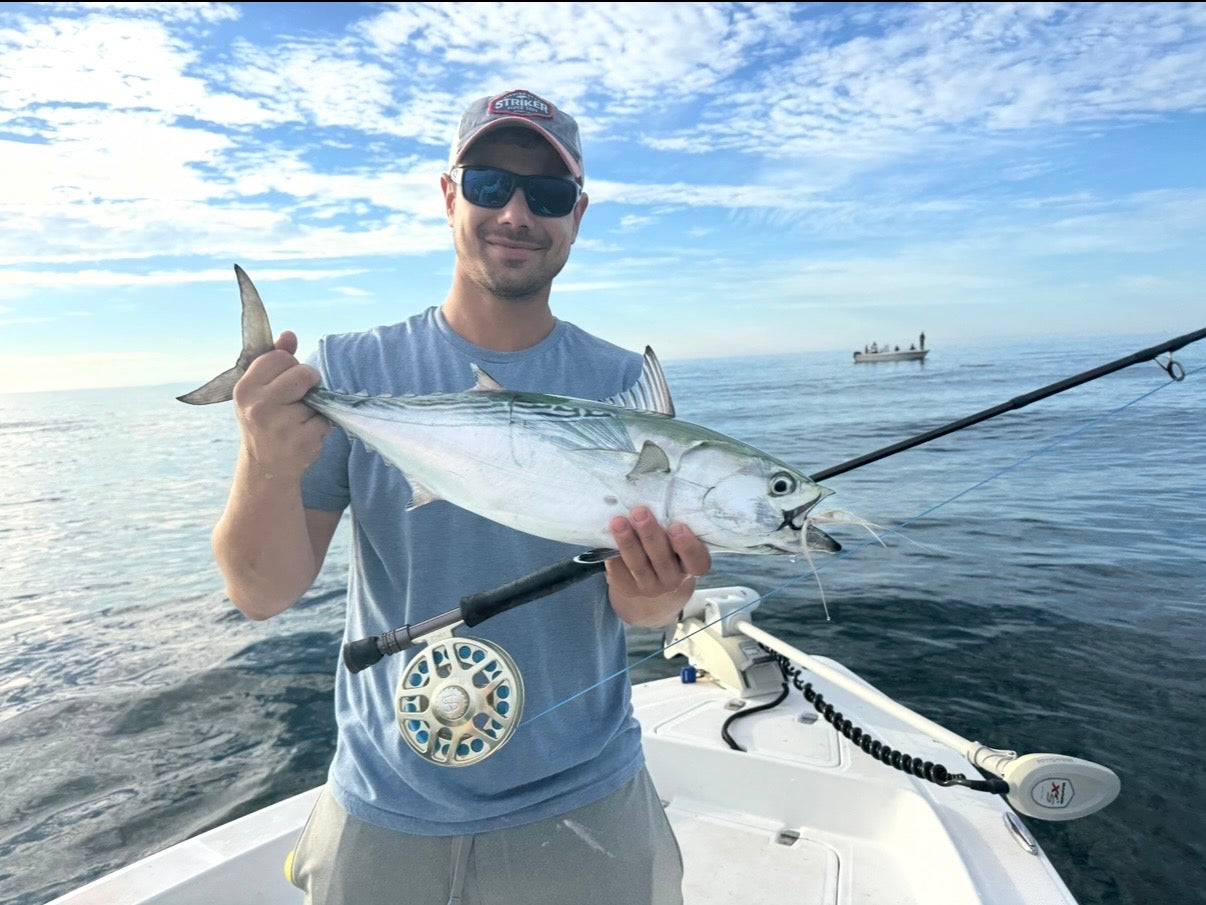
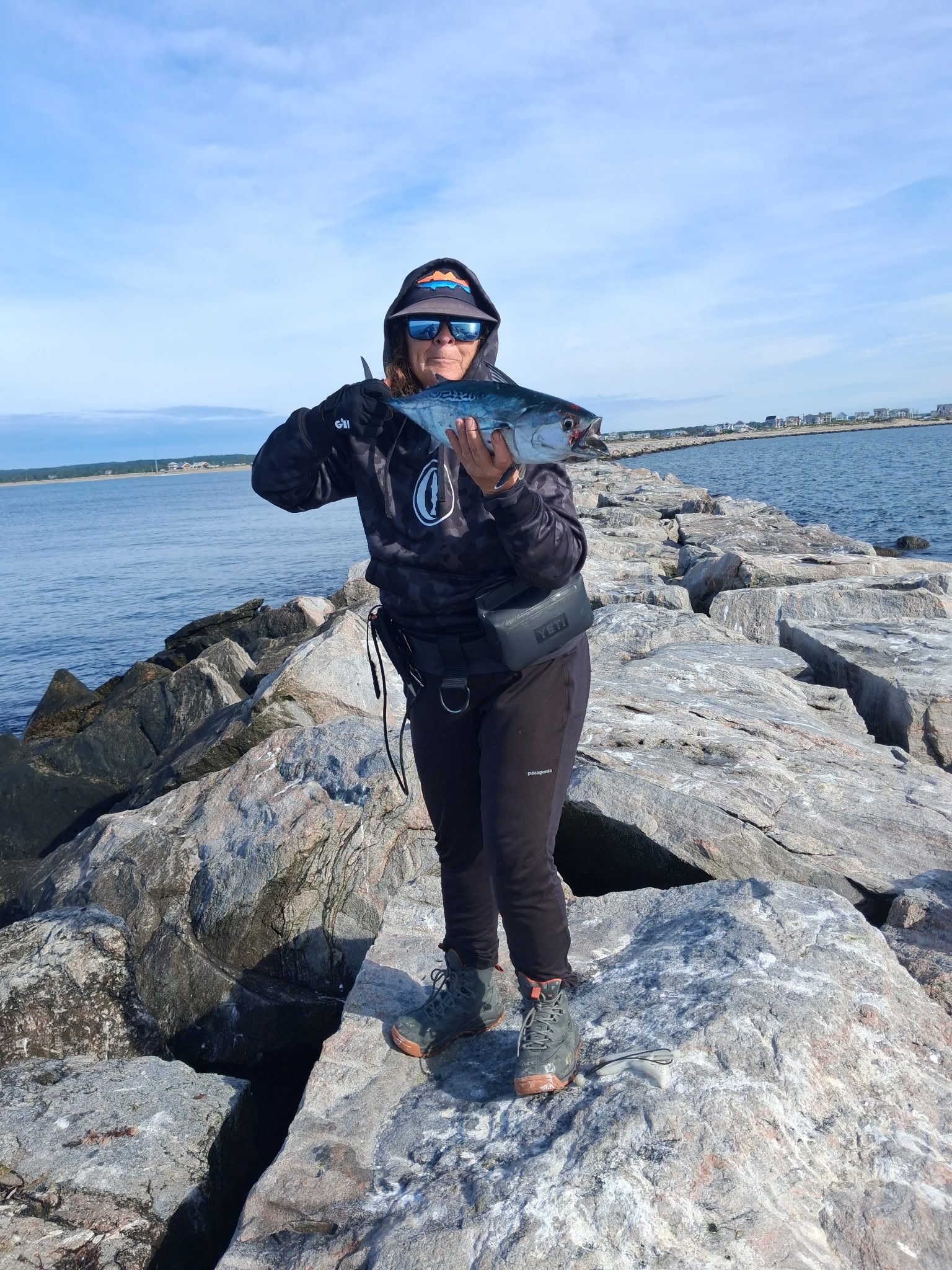
That makes it deadly for albies (cast past the school, let it stall on the dinner table instead of hustling it away), a sleeper for jigging sea bass, and the maximum-distance option when fish are on the far side of the bar. Chris's beach technique: cast to breaking fish, let it sink with the rod tip up to slow the fall, and expect the hit on the drop. Five sizes, from albie snacks up to a bait Chris throws at tuna.
Chris's top Northeast colors
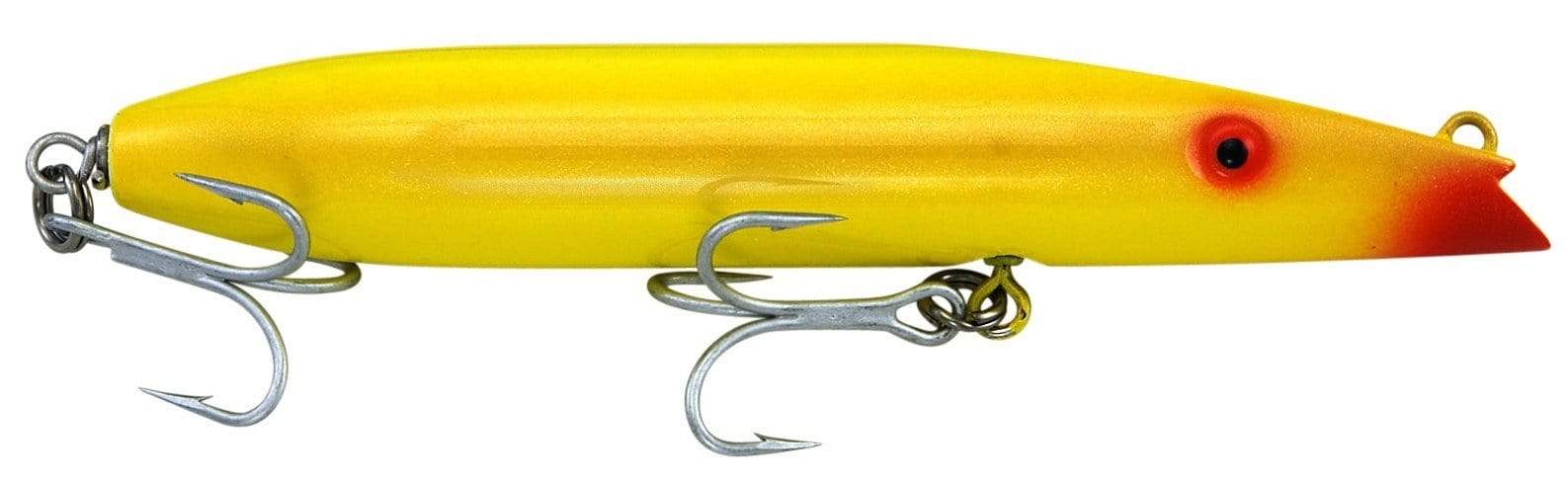
Pressed for his confidence colors, Chris gave us four, in rough order: all yellow (school bus / scrambled eggs — there's research suggesting stripers key on it, likely a bunker association), bone (the standard, even if nobody can fully explain it), bronze/bunker (the "HAJ" pattern — actually a Japanese baitfish called ayu, but a dead ringer for our bunker, with the light-belly-dark-back gradient fish key on), and green mackerel when you're Cape-side — his two biggest Canal fish came on Wacky Mac and straight green mackerel.
His rule of thumb: match the bait closely when bait is scarce; when there's an obscene amount of bunker in the water, switch to something like all yellow that's similar enough but stands out from the billion other targets.
The bigger picture
What's changed at Yo-Zuri over the last several years is regional development. A worldwide Japanese company used to need global volume to justify a product; now, thanks to support from Northeast shops and anglers, they build lures and colors specifically for this fishery — and every bait in the line is still under $30, with hooks and hardware that are ready to fish out of the box.
Watch or listen to the full conversation on our YouTube channel and wherever you get podcasts, and shop the full Yo-Zuri lineup at Saltwater Edge.



Dejar un comentario